- やさしい日本語
- ひらがなをつける
- Language
We provide multilingual content through machine translation. Translation accuracy is not 100%. About the multilingualization of the JAC website





- Home
- JAC Magazine
- Working with foreign workers
- Check out the causes and safety measures for the three major disasters in the construction industry!
- Home
- JAC Magazine
- Working with foreign workers
- Check out the causes and safety measures for the three major disasters in the construction industry!

Check out the causes and safety measures for the three major disasters in the construction industry!
I wrote the article!


Japan Association for Construction Human Resources
Chief of Research and Development Department / Administration Department / Public Relations Department
Motoko Kano
(Kano Motoko)
Hello, this is Kano from JAC (Japan Association for Construction Human Resources).
The construction industry is an industry prone to many occupational accidents.
When considering safety measures in the construction industry, it is very important to know the reasons and causes of occupational accidents.
In this article, we will explain the "three major accidents in the construction industry" that are particularly likely to occur among occupational accidents in the construction industry.
We will also introduce safety measures that are useful in the workplace where foreign workers work.

What are the three most serious disasters in the construction industry?
The three major accidents in the construction industry are the following three accidents that occur frequently and are likely to result in fatalities.
- Fall and fall accidents
- Construction machinery and crane disasters
- Collapse and collapse disasters
These accidents account for a large proportion of work-related accidents in the construction industry as a whole.
The death tolls associated with the three major disasters are as follows:
- Falls and falls: 86 people
- Construction machinery and crane accidents: 81 people
- Collapse and collapse disasters: 18 people
*The number of "construction machinery, crane, etc. accidents," which is classified by cause, includes the number of "falls" and "collapses," which are classified by type of accident.
*Created based on the "Status of Occupational Accidents in the Construction Industry" by the Construction Industry Occupational Accident Prevention Association
We will provide a detailed explanation of each disaster, with reference to the following materials from the Ministry of Health, Labor and Welfare and the Ministry of Land, Infrastructure, Transport and Tourism.
Ministry of Health, Labor and Welfare "Occupational Accident Occurrence Status" (2023)
Ministry of Health, Labor and Welfare and Ministry of Land, Infrastructure, Transport and Tourism: "Current Status of Safety and Health in the Construction Industry"
① Fall accidents
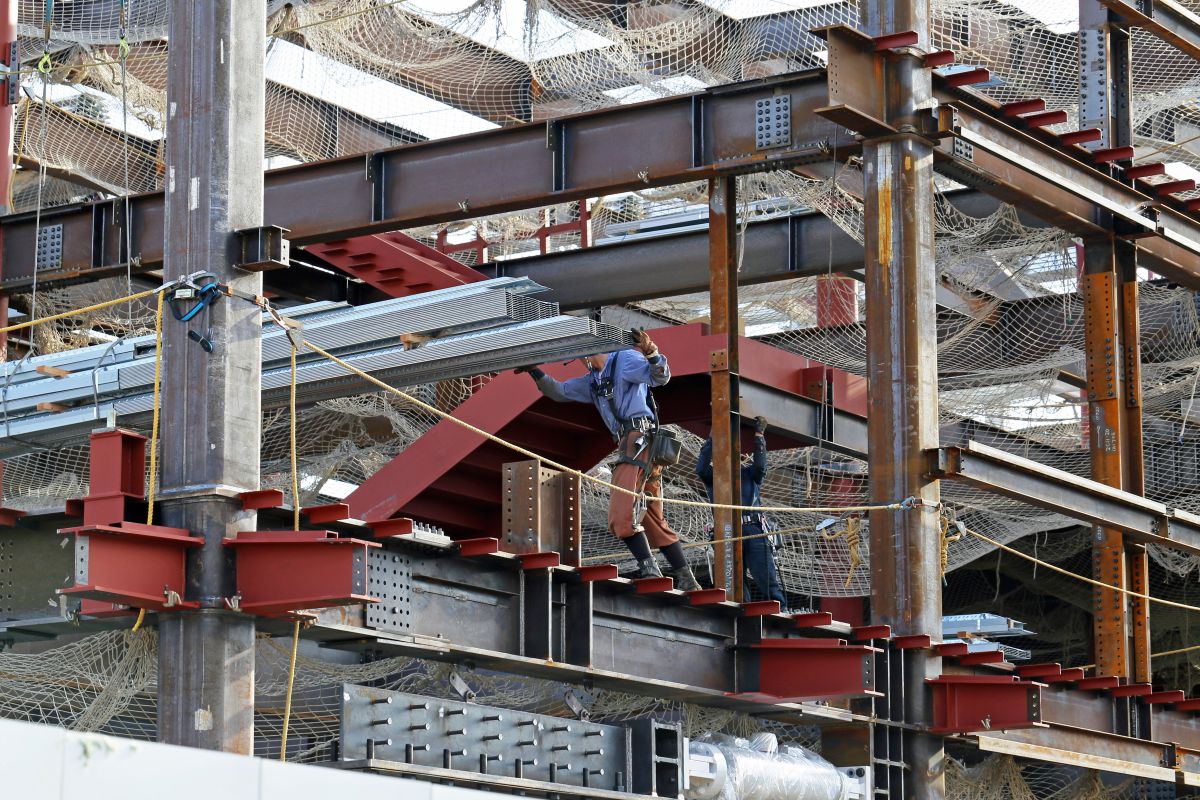
These are accidents in which workers slip and fall from scaffolding, roofs, openings, etc. while working at height, or when handrails come loose and they fall.
This includes falls from ladders and step ladders.
Of the three major accidents, it is the most likely to result in a fatal accident, accounting for approximately 40% of all fatal accidents in the construction industry in recent years.
Of all fall accidents, falls from the edges or openings of roofs and other surfaces account for approximately 30%, and falls from scaffolding account for approximately 20%.
② Disasters involving construction machinery, cranes, etc.
These are accidents that occur while operating or around construction machinery such as bull dozers, drag shovels, rollers, or mobile cranes.
Common accidents include contact with or being caught in machinery, heavy objects flying or falling, and construction machinery or cranes themselves tipping over.
Other accidents include contact with hot or cold objects or harmful substances, drowning, and electric shock.
In terms of the breakdown of fatalities caused by accidents involving construction machinery, cranes, etc., accidents involving trucks, mobile cranes, and construction machinery account for nearly half.
3) Collapse and collapse disasters
This is an accident in which a building, structure, scaffolding, earth and sand falls or collapses, hitting a worker.
This also includes the collapse of loaded materials.
Excavating work Landslides during work, collapse of buildings during demolition work, collapse of formwork shoring are the main examples.
Once it occurs, it is easy to lead to major damage.
Fatal accidents caused by collapses and collapses are the third most common cause of death after falls and accidents involving construction machinery and cranes, and in recent years they account for approximately 10% of all fatal accidents in the construction industry.
The occurrence of fatal accidents has decreased as follows:
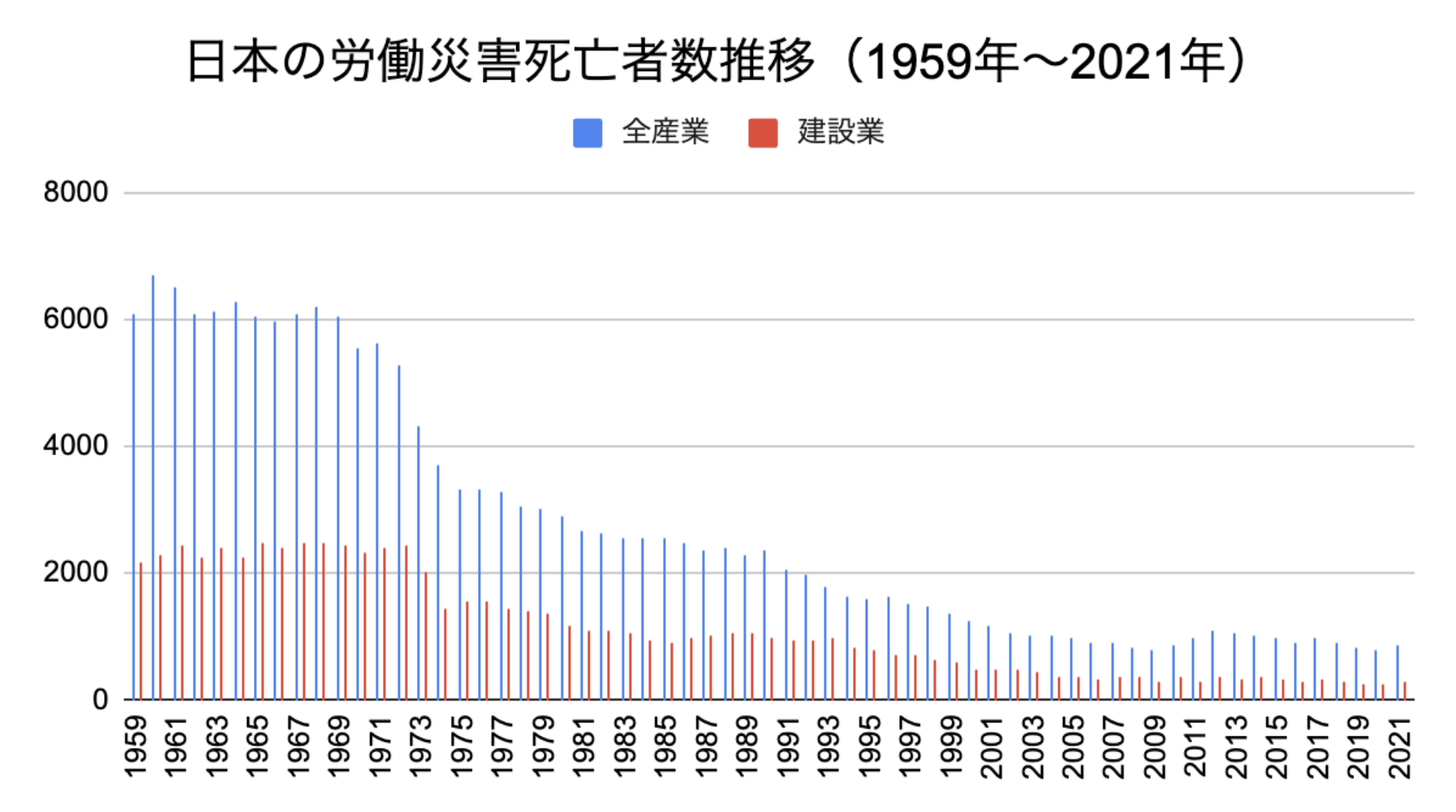
Looking at the trends over the 50 years up to 2021, employment has decreased to about one-seventh in all industries and to about one-ninth in the construction industry.
- All industries: 6,208 people (1969) → 867 people (2021)
- Construction industry: 2,492 people (1969) → 288 people (2021)
However, because the construction industry has a higher rate of fatal accidents than other industries, it is being designated as a priority industry in the government's occupational accident prevention plan and measures are being implemented.
Why are there so many of the three major disasters in the construction industry? Check the causes
The three major disasters occur frequently in the construction industry because there are many dangers on site and various factors tend to overlap.
The main reasons why there are so many three major disasters
The three major disasters that occur frequently in the construction industry are as follows:
- A lot of work at height
- Use of large machinery
- Changes in the work environment
- Lack of on-site maintenance
- Human factors of workers
- Inadequate management system
- Influence of external environment, etc.
At construction sites, work at heights, such as building construction and renovation, occurs on a daily basis, so workers are constantly at risk of falling.
Because the work involves the use of large, powerful machinery such as cranes, a momentary operating error or a failure to check one's surroundings can easily lead to serious accidents.
In addition, unexpected situations are prone to occur in constantly changing site conditions such as Excavating work and demolition, and inadequate installation of scaffolding and handrails, as well as insufficient maintenance of machinery, can also lead to accidents.
It can also be caused by the skills, awareness, and physical condition of the worker himself, such as lack of experience, low safety awareness, and poor judgment ability due to fatigue.
Furthermore, factors that make it difficult to ensure safety include a lack of communication between workers, and rushing work without adhering to safety management plans during bad weather or busy periods.
Main causes of each disaster
Let's also take a look at the causes of each of the three major disasters.
Main causes of falls
The main causes of falls and accidents include:
- Working at height: Falling from scaffolding, roofs, openings, etc., losing balance, etc.
- Non-use or improper use of safety belts: Working without wearing a safety belt or without wearing it correctly
- Inadequate scaffolding and handrails: Unstable scaffolding, missing or insufficiently fixed handrails, deterioration, etc.
- Poor working conditions: slippery floors, untidy work areas, poor lighting, etc.
- Falls from ladders and step ladders: Improper installation, incorrect use, etc.
Many falls and accidents at construction sites occur due to inadequate safety measures.
First, when it comes to falling from roof edges or openings, especially in small-scale construction projects, this is often caused by a lack of knowledge and experience regarding safety measures.
In addition, the current situation is that the installation of handrails and the wearing of fall prevention equipment such as safety belts, which are required by law, are not being carried out properly.
Many falls that occur during normal work on scaffolding occur because handrails are not installed on the scaffolding or safety inspections are not carried out properly.
Main causes of accidents involving construction machinery and cranes
The main causes of accidents involving construction machinery, cranes, etc. are as follows:
- Insufficient confirmation of surroundings/occurrence of blind spots: Contact accidents due to insufficient confirmation by the operator or blind spots
- Operational errors and misoperations: improper operation, lack of experience, misjudgment due to fatigue, etc.
- Insufficient inspection and check of machinery: Failure to carry out inspections, neglecting to inspect before starting work, leaving malfunctions unattended, etc.
- Unintended use: Overloading or imbalance caused by using the machine for purposes other than those intended.
- Lack of guides: Lack of guides and lack of coordination when moving large machinery or operating cranes
- Operation by unqualified persons: Operation by persons who are not qualified to operate or drive machinery.
Many accidents have been reported due to insufficient checking of surroundings, especially when backing up.
Since blind spots are likely to occur when operating construction machinery or cranes, multiple people generally work together, but accidents can occur when communication between the operator and the guide is not effective.
Common examples of unintended uses include lifting heavy materials with a drag shovel (backhoe), using a forklift as a crane, and using a bulldozer for towing work.
These unintended uses are often caused by reasons such as "not having the right machine at hand," "wanting to hurry up with the work," or "lack of safety awareness."
Main causes of collapse and destruction disasters
The main causes of collapses and disasters are as follows:
- Natural disasters: Collapse of structures and scaffolding, landslides, etc. due to natural disasters such as typhoons, heavy rains, and earthquakes
- Poor design and construction: Insufficient strength due to design errors or inappropriate construction methods and materials
- Excavating work Inadequacy of work: Landslides due to lack of soil surveys and failure to take appropriate soil retention measures
- Improper management of materials: materials left stacked in an unstable state, loads falling over
- Ignoring proper work procedures: Structures collapse due to ignoring procedures or unreasonable work.
The causes of collapse and destruction disasters can be broadly divided into "human factors" and "natural disaster factors."
"Human factors" include insufficient strength of buildings and structures, design errors, and improper stacking of materials.
Regarding "natural disaster factors," there have been many reported cases of scaffolding and temporary structures collapsing due to bad weather such as typhoons, heavy rain, and tornadoes.
If bad weather is expected, it may be necessary to stop work early.
Safety measures to prevent the three major accidents in the construction industry

To prevent accidents at construction sites, measures tailored to each site are necessary.
We will introduce some important points to keep in mind regarding basic safety measures that should be taken, as well as safety measures for foreign workers, who have been increasing in number in recent years.
Key points of safety measures to prevent the three major accidents in the construction industry
Below are five points to keep in mind when it comes to safety measures in the construction industry.
1. Thorough safety measures
The basic principle is to comply with occupational safety and health laws and regulations and thoroughly implement safety measures on site.
For example, there is "hazard prediction activity (KY activity)," in which all workers check "what dangers there may be on that day" before starting work.
During risk prediction activities, we check for potential dangers at the site, taking into consideration the conditions of the day, such as the site situation, weather, and the physical condition of the workers.
In addition, "risk assessment," which is carried out at the stage of creating work procedures and construction plans, is also a necessary measure to proceed with construction safely.
Risk assessment involves identifying risk factors, evaluating the risks, and planning countermeasures.
Identifying dangerous areas in advance and taking measures to prevent accidents can help prevent accidents from occurring.
2. Improving the work environment
Improving the workplace environment can significantly reduce the risk of accidents.
The most common accidents in the construction industry are falls.
Be sure to install handrails on scaffolding and work floors, and cover or fence openings to prevent falls.
When working at heights, it is also important to ensure that safety harnesses are worn and used correctly.
In addition, to prevent accidents involving construction machinery, cranes, etc., thoroughly inspect the machinery before starting work and stop using it if any abnormalities are found.
When using heavy machinery, it is important to have guides on hand and to establish clear signals between the operator and the guides.
Excavating work Proper installation of shoring work in work, safe stacking of materials, and thorough design and construction management of temporary structures are important to prevent collapse and collapse disasters.
3. Strengthening safety education
It is important that all workers receive regular safety training related to their work.
In particular, specialized knowledge is required when engaging in dangerous or harmful work such as working at heights, operating heavy machinery, or assembling and dismantling scaffolding.
By teaching by actually doing the work rather than just giving verbal explanations, employees will learn safe work methods.
4. Use a checklist
Make active use of the "Work Accident Prevention Checklist" provided by the Ministry of Health, Labor and Welfare.
Ministry of Health, Labor and Welfare Work Accident Prevention Checklist
This prevents oversights in safety measures and allows you to check whether the measures are being implemented properly.
It is also possible to comprehensively identify risk factors in each task and objectively evaluate countermeasures.
5. Promoting near miss prevention measures (near miss campaign)
It is also effective to actively report and share incidents that did not actually result in an accident but gave you a "close call" or "surprise" (near miss cases), and to consider the causes and countermeasures.
Use it as a learning opportunity for all workers, spot hazards early, and try to make improvements before an actual accident occurs.
Important points for companies to consider when ensuring the safety of foreign workers
In recent years, foreign workers have become indispensable in the construction industry.
According to the employment status of foreigners compiled by the Ministry of Health, Labor and Welfare*, there are approximately 178,000 foreigners working in the construction industry.
* Ministry of Health, Labor and Welfare Summary of Notification Status of "Foreign Employment Status"
As a result, the number of casualties among foreign workers is also increasing.
Let's also take a look at the safety measures required for foreign workers in the construction industry.
Dealing with language barriers
When giving instructions to foreign workers or informing them of dangerous areas, language differences can be a major barrier.
Since Japanese is often not easily understood, it is important to choose a method that will ensure the content is conveyed.
It is necessary to devise ways to ensure that instructions are conveyed accurately, such as by creating multilingual safety manuals, providing interpreters, and posting illustrations.
Understanding differences in culture and customs
Safety awareness and customs may differ from country to country.
It is important to carefully explain and ensure that Japanese safety standards and work rules are understood.
In such a field, it is also important to give instructions in a Japanese called "Plain Japanese", which is easy for foreigners to understand.
We have introduced it in detail here, so please refer to it.
What is Plain Japanese? Introducing example sentences and how they were born
JAC offers a variety of free courses to support companies in creating workplaces where both foreigners and Japanese people can work together.
It is full of useful information in the field with foreign staff, such as cross-cultural understanding and Plain Japanese that are easy for foreigners to understand.
"Foreigner Symbiosis Course" for Japanese employees
We also have reports on past courses, missed broadcasts, and materials available, so please take a look.
Thorough safety training
Consider language and cultural differences and provide thorough, easy-to-understand safety training repeatedly.
It is also effective to incorporate demonstrations and on-the-job training.
Safety education for foreign workers is explained in detail here.
What is Safety and Health Education for foreign workers? Introducing teaching materials that can be used
JAC offers free Safety and Health Education and skills training in their native language for Specified Skilled Worker in the construction field.
Please use it as part of safety education for foreign workers at construction sites.
JAC Safety and Health Education Support (JAC Online Special Education/JAC Technical Training)
Creating an environment where it is easy to seek advice
It is also important to create an environment where people can feel free to consult about their concerns, questions, and problems.
By setting up a reliable consultation desk and holding regular interviews, you can support foreign workers so that they can work with peace of mind.
Summary: Safety measures, including for foreign workers, are important to prevent the three major accidents in the construction industry!
The construction industry is particularly prone to workplace accidents.
Compared to other industries, the three major accidents that are likely to lead to fatalities - "falls and other falls," "construction machinery and crane accidents," and "collapses and collapses" - tend to occur more frequently in the industrial sector.
The causes of the three major disasters are varied, including frequent work at heights, lack of safety management, using machinery for purposes other than its intended use, and improper loading of materials, but in many cases multiple factors intertwine to lead to accidents.
To prevent the three major disasters, it is important to implement thorough safety measures.
Let's create a safe working environment, actively utilize checklists, and share near miss cases.
Safety measures for foreign workers, who have been increasingly employed in the construction industry in recent years, are also important.
As the number of deaths and injuries among foreign workers is also increasing, we need to think about safety measures that foreign workers can fully understand.
If you are a company that is considering accepting Specified Skilled Worker in the construction industry, please feel free to contact JAC!
We also introduce Specified Skilled Worker.
*This column was written based on information from June 2025.
The author of this article
Japan Association for Construction Human Resources
Chief of Research and Development Department / Administration Department / Public Relations Department
Motoko Kano
(Kano Motoko)


Born in Aichi Prefecture.
He is in charge of public relations, research and investigation, and is the person behind social media.
We update our social media accounts daily with the desire to make people fall in love with Japan, to spread the appeal of construction from Japan to the world, and to ensure that Japan's construction industry continues to be the industry of choice around the world.
He is also engaged in research into the feasibility of implementing skills evaluation exam in Asian countries, and is conducting interviews with local organizations in each country.
Related articles
[Survey Report] Viewing from the Survey Perspective! Specified Skilled Worker Challenges After Acceptance
[Survey Report] Insights from Surveys! Specified Skilled Worker The Realities of Acceptance Preparation

Considering "Japanese language education" for foreign workers: What are the necessities and teaching methods?
What makes a workplace welcoming to foreigners? Key points for creating a workplace that companies should implement.